Birth Chart Reading: Avoid 7 Hidden Natal Mistakes
Have you ever read your horoscope and thought, “This sounds nothing like me?” That is usually the moment people realize a real birth chart reading goes far beyond just the Sun sign. In Vedic astrology, your chart is a full map of your mind, emotions, karma, strengths, and life direction. If you want a faster way to explore your chart, you can also start with Astroha AI platform.
Many beginners make the same hidden mistakes when reading a natal chart. They focus only on one placement, ignore the birth time, or mix Western ideas with Vedic chart rules without understanding the difference. This can create confusion and lead to flat or inaccurate interpretations. The good news is that once you learn the right framework, the chart becomes much easier to understand.
In this guide, you will learn what birth chart reading really means, why it matters, the basic building blocks of a chart, and the seven common mistakes that quietly mislead beginners. We will keep things simple, practical, and rooted in Vedic astrology, so you can build confidence step by step instead of feeling overwhelmed.
What Is Birth Chart Reading?
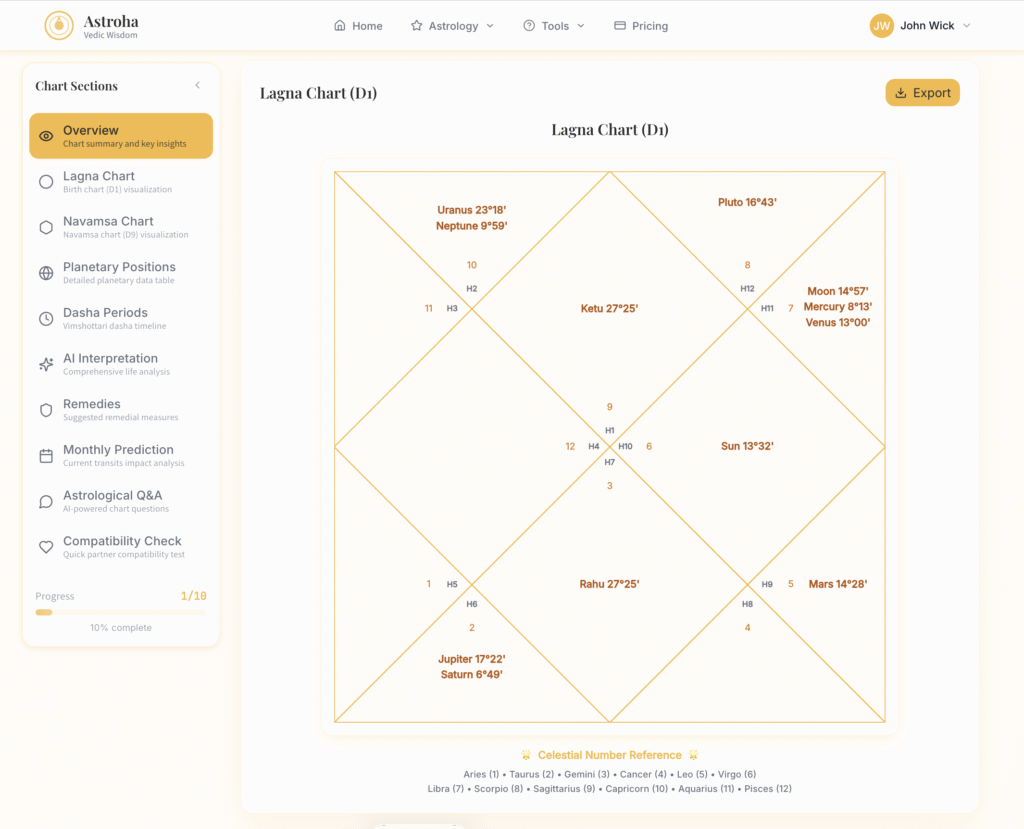
Birth chart reading is the interpretation of the planetary positions, zodiac signs, houses, and aspects at the exact time of your birth. In Vedic astrology, this chart is often called a janam kundli or natal chart. It is based on your birth date, exact birth time, and birthplace.
Did you know two people with the same Sun sign can have completely different birth charts? That is because the Moon, Ascendant, house placements, planetary strengths, and dashas all change the story. A birth chart reading looks at the whole pattern, not just one label.
Think of the chart in three simple parts. Planets show what energy is active. Signs show how that energy behaves. Houses show where in life that energy plays out. If you are new to this subject, reading through Vedic astrology basics can help you understand these foundations faster.
In Vedic practice, the Moon and Ascendant are often especially important because they reveal your inner life and real-world path. This is why a full chart often feels more accurate than general horoscope content. It gives a more personal and detailed view of who you are and what patterns shape your life.
Why Birth Chart Reading Matters – From confusion to self-awareness
A deep chart reading can bring clarity to parts of life that feel confusing. You may finally understand why you react strongly in relationships, why certain jobs drain you, or why one life lesson keeps repeating. The chart does not remove free will, but it can show your natural tendencies and likely challenges.
In Vedic astrology, the birth chart meaning is closely tied to karma and timing. Certain placements can point to emotional sensitivity, leadership ability, spiritual interest, family patterns, or delays that mature with time. When you see these themes clearly, you stop blaming yourself for everything and start working with your nature instead of against it.
For example, someone may think they are “bad at love” because relationships have been difficult. But a chart may show Saturn influencing Venus, which often brings slow lessons, caution, or emotional maturity in romance. That insight changes the story from failure to growth.
Birth chart reading also helps with decision-making. You can better understand your communication style, career needs, emotional triggers, and ideal environments. Many people are surprised to find that they connect more with their Moon sign or Rising sign than with their Sun sign, which is why the full chart matters so much.
- It reveals patterns in love, work, family, and emotions.
- It helps you make wiser choices with more self-awareness.
- It explains why your personality is more complex than one sign.
Birth Chart Reading Basics: Planets, Signs, Houses, and Aspects – The core concepts you need first
If your chart feels overwhelming, these four building blocks explain almost everything. In an astrology birth chart, every interpretation starts by understanding what the planet is doing, which sign it is in, which house it occupies, and what aspects influence it.
Planets are the actors in the chart. In Vedic astrology, the nine grahas include the Sun, Moon, Mars, Mercury, Jupiter, Venus, Saturn, Rahu, and Ketu. Each one represents a key part of life, such as ego, mind, energy, speech, wisdom, love, discipline, desire, or detachment.
Signs describe the style of expression. A planet in Aries acts differently from the same planet in Pisces. Fire signs are bold, earth signs are practical, air signs are mental, and water signs are emotional. If you need a refresher, this zodiac signs guide is a helpful starting point.
Houses show the life area where events and energies appear. The first house relates to self and body, the fourth to home and emotional roots, the seventh to partnerships, and the tenth to career and public image. A strong Venus in the tenth house can show charm and creative appeal in career, while the same Venus in the fourth may focus more on comfort, home, or inner peace.
Aspects show how energies interact. A supportive aspect can strengthen talents, while a tense one can create lessons or friction. In Vedic astrology, aspects are read with special attention to graha drishti and house influence. This adds more depth than reading placements in isolation.
When you combine these four layers, the chart begins to make sense. You are no longer memorizing random meanings. You are reading a living pattern.
Get Your Free Horoscope on Astroha
How to Read a Birth Chart Step by Step – A beginner-friendly process
Want to know how to read a birth chart without getting lost? Start simple. Do not try to decode every placement at once. In Vedic astrology, it is best to build from the center outward.
1. Start with the Big 3: Sun, Moon, Rising
The Sun shows your core vitality and purpose. The Moon shows your emotional nature and mind. The Rising sign, or Ascendant, shows how life unfolds through your body, identity, and life path.
2. Identify your chart ruler
The lord of your Ascendant is a major key in Vedic reading. Its placement by sign and house tells you a lot about your focus, strengths, and life direction.
3. Study personal planets first
Look at the Sun, Moon, Mars, Mercury, Venus, and Jupiter before diving into more advanced layers. These planets shape daily experience in a clear and relatable way.
4. Check the houses they fall in
A planet changes meaning depending on the house. Mercury in the second house may point to speech, learning, or finance themes. Mercury in the twelfth may show introspection, foreign links, or behind-the-scenes thinking.
5. Review major aspects and repeating themes
Notice patterns that repeat. If Saturn influences the Moon, fourth house, and mind-related houses, emotional seriousness may be a strong life theme. Repetition often reveals the heart of a natal chart reading.
This process keeps the chart manageable. Start broad, notice patterns, and then go deeper.
Common Birth Chart Reading Mistakes to Avoid – Beginner errors that cause confusion
Most beginners do not struggle because astrology is impossible. They struggle because they are reading the chart in a scattered way. These seven hidden mistakes can distort your understanding and make a useful chart feel confusing.
1. Ignoring birth time accuracy
Even a small time change can shift the Ascendant and houses. In Vedic astrology, that can affect the whole reading.
2. Focusing only on the Sun sign
This is the most common error. A natal chart reading must include the Moon, Ascendant, and house lords, not just the Sun.
3. Reading one placement in isolation
Venus in Scorpio does not mean the same thing in every chart. You must consider aspects, dignity, house placement, and planetary periods.
4. Mixing systems carelessly
Western tropical and Vedic sidereal astrology use different reference points. You can study both, but do not blend meanings without understanding the system.
5. Misreading houses
Many people know signs but skip houses. Yet houses are essential because they show where results appear in real life.
6. Taking astrology too literally
A difficult placement does not guarantee failure. It often points to a lesson, delay, or area that matures with effort.
7. Forgetting chart context
No single planet tells the whole story. You must look for themes, strengths, weaknesses, and overall balance.
A careful birth chart reading is about patterns, not panic. The goal is clarity, not fear.
Unlock Birth Chart Reading with Astroha’s AI Astrology – Faster, clearer, personalized insights
If you are new to astrology, technology can save you hours of confusion. An AI birth chart reading tool can organize placements, explain meanings in simple language, and help you see patterns you might miss on your own. That is especially useful when you are learning Vedic chart structure.
With the Astroha AI platform, the process is simple. You enter your birth date, time, and birthplace. The system maps your chart and gives personalized insights for signs, houses, planets, and major life themes.
Enter your birth details
Accurate birth data helps produce a more reliable chart. This is important because house placements and Ascendant-based predictions depend on timing.
Let Astroha map your chart instantly
Instead of manually calculating each placement, the platform builds the chart in seconds. This removes the technical barrier that stops many beginners.
Get personalized interpretations
You can quickly understand your Moon sign, Rising sign, Venus placement, Saturn influence, and more. The language is practical, so it feels easier to apply in daily life.
Compare AI summary with manual learning
AI tools work best when used as a guide, not a replacement for learning. You can read the summary first and then study the logic behind it. This helps you grow from beginner to confident reader.
Use it for daily and long-term guidance
Astroha can support self-discovery, compatibility questions, and ongoing reflection. It is a helpful bridge between beginner curiosity and deeper astrological study.
If you want faster insight without drowning in technical terms, AI can make birth chart reading more approachable and more personal.
Best Tools for Birth Chart Reading – Free and practical resources
The right tools can turn a confusing chart into a clear roadmap. You do not need dozens of apps. You just need a few reliable resources that support learning and reflection.
Birth chart calculator
This is the first step. A good calculator gives accurate planetary positions, Ascendant, and house layout based on your birth data.
AI astrology interpreter
This helps translate symbols into plain English. It is especially useful for beginners who want quick understanding before studying deeper meanings.
House and aspect references
Keep a simple guide for house meanings and major planetary aspects. These are essential for moving beyond surface-level interpretations.
Journal prompts
Write down how placements show up in your life. This helps you test chart meanings through real experience rather than memorizing keywords.
Transit tracker
Once you understand your natal chart, tracking current planetary movement helps you connect timing with actual events and moods.
A balanced mix of calculation, interpretation, and self-reflection creates much stronger learning than reading random chart meanings online.
Birth Chart Reading FAQ
What do I need for a birth chart reading?
You need your birth date, exact birth time, and birthplace. These details help calculate the Ascendant, houses, and planetary positions correctly. Without accurate data, the reading may lose depth and precision.
Can I read my birth chart without knowing my birth time?
Yes, but only partly. You can still learn your Moon and planetary signs for that day, but the Ascendant and house placements may be wrong. In Vedic astrology, birth time is very important for a full reading.
What are the most important placements in a chart?
The Ascendant, Moon sign, Sun sign, and Ascendant lord are among the most important. In Vedic astrology, the Moon often carries extra weight because it reflects the mind, emotions, and lived experience.
Is birth chart reading the same as a horoscope?
No. A horoscope is usually a general forecast based on one sign, often the Sun or Moon sign. A birth chart reading is personalized and based on your exact birth details, making it much more specific.
How accurate is AI birth chart reading?
AI can be very useful when the birth data is accurate and the system is well designed. It works best for quick explanations, pattern spotting, and beginner learning. For complex life questions, human judgment and deeper study still matter.
How long does it take to learn natal chart reading?
You can learn the basics in a few days, especially if you focus on planets, signs, houses, and the Ascendant. But becoming skilled takes time, practice, and real-life observation. Astrology is simple to begin and deep to master.
What is the difference between a birth chart and a natal chart?
There is no real difference. Both terms describe the chart created from the exact time and place of birth. In Vedic astrology, many people also call it a janam kundli.
Related Astrology Topics to Explore
Once you understand your chart, many related topics become easier and more meaningful. Learning step by step helps you connect individual placements to bigger life patterns.
- Sun sign vs Moon sign and why both matter in daily life
- Rising sign meaning and how the Ascendant shapes your path
- The 12 houses and what each life area represents
- Venus in love and relationship style
- Mercury and communication patterns
- Saturn return and major maturity lessons
- Synastry and chart compatibility in relationships
- Transit astrology for timing and life phases
The more you explore, the easier it becomes to see astrology as a connected system instead of isolated facts. Start with the basics and let each topic deepen your understanding naturally.
Ready to Master Birth Chart Reading?
Your chart is not a sentence. It is a guide. A thoughtful birth chart reading can help you understand your personality, emotional needs, relationship patterns, strengths, and karmic lessons with much more clarity than a simple horoscope ever could.
Remember the key ideas from this guide. Focus on planets, signs, houses, and aspects. Start with the Big 3. Avoid the seven common mistakes. Most of all, read the chart as a whole pattern, not as a collection of disconnected labels.
If you want a simple way to begin, use AI tools to turn complex placements into clear insight. Whether you are curious about your Moon sign, career path, or hidden strengths, the right guidance can make astrology feel practical and personal.
Your birth chart is a map of your potential. The more clearly you read it, the more wisely you can use it.
Ready to Discover Your birth chart reading?
Get personalized insights with Astroha’s AI tools.